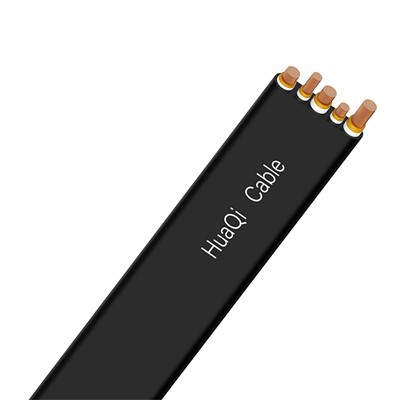
Hey there! As a supplier of PE sheathed cables, I've seen firsthand how different factors can impact cable performance. One of the most critical aspects that often gets overlooked is frequency. In this blog, I'll break down how frequency affects the performance of PE sheathed cables and why it matters for your projects.
Understanding Frequency in Cables
Before we dive into the impact of frequency, let's quickly go over what frequency means in the context of cables. Frequency refers to the number of cycles of an alternating current (AC) that occur in one second, measured in Hertz (Hz). In simple terms, it's how often the direction of the electrical current changes.
In power transmission and distribution, different applications require different frequencies. For example, the standard frequency for most power grids around the world is 50 Hz or 60 Hz. However, in some specialized applications like radio communication, frequencies can range from a few kilohertz (kHz) to several gigahertz (GHz).
How Frequency Affects PE Sheathed Cable Performance
1. Dielectric Losses
One of the primary ways frequency affects PE sheathed cables is through dielectric losses. The dielectric material in a cable, in this case, polyethylene (PE), acts as an insulator between the conductors. When an AC voltage is applied, the dielectric material experiences a changing electric field, which causes the molecules in the material to vibrate.
As the frequency increases, the rate of these molecular vibrations also increases. This increased molecular activity leads to more energy being dissipated as heat within the dielectric material. This heat generation can cause the cable temperature to rise, which in turn can degrade the performance of the cable over time. Higher temperatures can also reduce the lifespan of the cable and increase the risk of insulation breakdown.
2. Skin Effect
Another significant effect of frequency on cable performance is the skin effect. The skin effect is the tendency of an alternating current to distribute itself within a conductor in such a way that the current density is higher near the surface of the conductor and lower towards the center.
As the frequency increases, the skin effect becomes more pronounced. At high frequencies, most of the current flows through a thin layer near the surface of the conductor, effectively reducing the cross - sectional area available for current flow. This results in an increase in the effective resistance of the conductor, which leads to higher power losses and reduced efficiency.
3. Capacitance and Inductance
Frequency also has an impact on the capacitance and inductance of a cable. Capacitance is the ability of a cable to store electrical energy in an electric field, while inductance is the ability to store energy in a magnetic field.
As the frequency increases, the capacitive reactance of the cable decreases, while the inductive reactance increases. This change in reactance can affect the impedance of the cable, which is the total opposition to the flow of alternating current. An improper impedance match can lead to signal reflections, which can degrade the quality of the transmitted signal, especially in high - frequency applications such as data transmission.
Impact on Different Types of PE Sheathed Cables
Reeling Cable
Reeling Cable is designed to be wound and unwound repeatedly, often in industrial applications such as cranes and hoists. The frequency of the electrical current in these applications can vary depending on the equipment's operation.
In high - frequency applications, the increased dielectric losses and skin effect can cause the reeling cable to heat up more quickly. This can be a significant problem, as excessive heat can damage the cable's insulation and reduce its flexibility, making it more prone to breakage during the reeling and unreeling process.
Drag Chain Cable
Drag Chain Cable is used in applications where the cable needs to move along with a drag chain, such as in automated machinery. These cables are often subjected to high - frequency signals, especially in control systems.
The skin effect and impedance changes at high frequencies can affect the signal integrity in drag chain cables. Signal reflections can cause errors in the control system, leading to malfunctions and reduced productivity. Additionally, the increased dielectric losses can cause the cable to heat up, which can accelerate the aging of the cable insulation and reduce its service life.
Cable Wire for Submersible Pump
Cable Wire for Submersible Pump is used in underwater applications, where reliability is crucial. The frequency of the power supply to the submersible pump can impact the cable's performance.


Higher frequencies can increase the dielectric losses in the cable, leading to more heat generation. In an underwater environment, where heat dissipation is more challenging, this can cause the cable temperature to rise significantly. Excessive heat can damage the cable's insulation and increase the risk of electrical leakage, which can be dangerous in a submersible pump application.
Choosing the Right PE Sheathed Cable for Your Frequency Requirements
When selecting a PE sheathed cable for your application, it's essential to consider the frequency of the electrical current. Here are some tips to help you make the right choice:
- Understand Your Application: Determine the frequency range of your application. If you're working with a power grid, the standard frequency is likely 50 Hz or 60 Hz. However, if you're involved in a specialized application such as radio communication or data transmission, the frequency requirements will be much higher.
- Consider Cable Construction: Look for cables with low - loss dielectric materials and proper conductor designs to minimize the effects of frequency. For example, using stranded conductors can help reduce the skin effect at high frequencies.
- Check the Temperature Rating: Make sure the cable has a temperature rating that can withstand the heat generated by dielectric losses at the expected frequency. A higher temperature rating will ensure the cable's long - term reliability.
Let's Talk!
If you're in the market for PE sheathed cables and need help choosing the right one for your frequency requirements, I'm here to assist you. Whether you need Reeling Cable, Drag Chain Cable, or Cable Wire for Submersible Pump, I can provide you with high - quality products and expert advice.
Feel free to reach out to start a conversation about your cable needs. I'm confident that I can offer you the best solutions for your projects.
References
- Grover, F. W. (1946). Inductance Calculations: Working Formulas and Tables. Dover Publications.
- Alexander, C. K., & Sadiku, M. N. O. (2009). Fundamentals of Electric Circuits. McGraw - Hill.
- Hayt, W. H., & Kemmerly, J. E. (2001). Engineering Circuit Analysis. McGraw - Hill.