

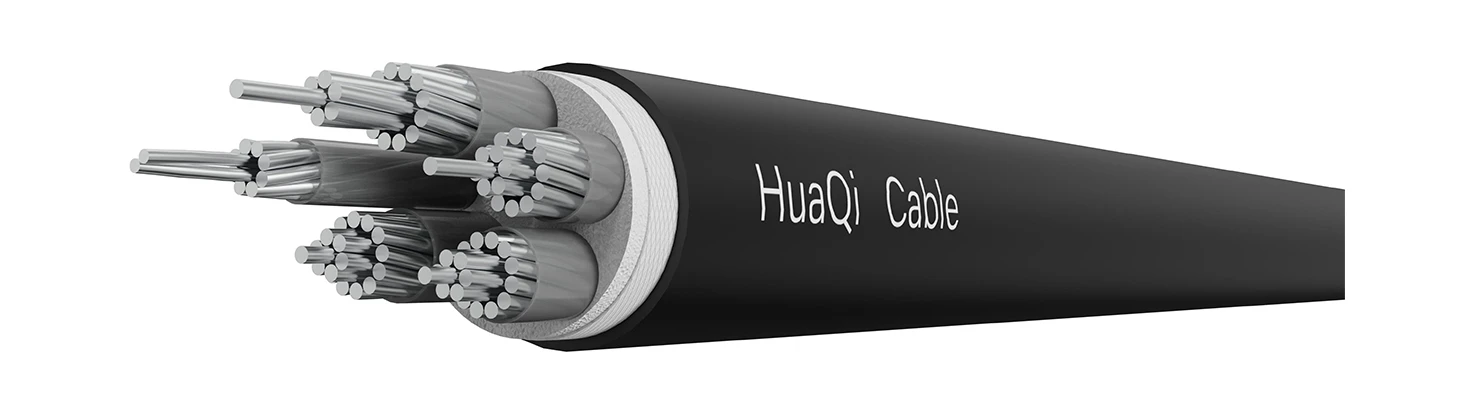
Aluminum core cable is a common type of cable that plays an important role in power transmission and distribution systems. However, this type of cable is not suitable for long-term use. What's the reason? Let me introduce it to you.
1. Oxidation and corrosion
Aluminum core cables are prone to oxidation and corrosion, as the oxide layer formed by the combination of aluminum and oxygen cannot prevent further oxidation and corrosion like copper. Therefore, this type of cable often requires maintenance and replacement.
2. Poor conductivity
Compared to copper, aluminum has poorer conductivity. This means that under the same cross-sectional area, the resistance of aluminum core cables is much higher than that of copper core cables. Due to the high resistance of aluminum, heat is easily generated when current flows, which may lead to wire damage or power loss.
3. High coefficient of thermal expansion
Different metals have different coefficients of thermal expansion, usually referring to the degree to which metals undergo linear expansion or contraction due to temperature changes. In contrast, aluminum has a higher coefficient of thermal expansion than other metals. This means that aluminum core cables are more susceptible to temperature changes during use, especially when the temperature rises or falls sharply.
4. Insufficient mechanical strength
Aluminum is a relatively soft metal, while copper is harder and stronger in comparison. When aluminum core cables are subjected to mechanical pressure or tension, they are easily damaged or broken. This limits the use of aluminum core cables in certain special environments, such as complex terrain or harsh weather conditions, and aluminum core cables are generally not chosen.
In short, although aluminum core cables have many advantages, they are not very suitable for long-term use. Due to issues such as oxidation and corrosion, aluminum core cables require more frequent maintenance and repair. In addition, their poor conductivity, insufficient mechanical strength, and huge thermal expansion coefficient also make them unable to meet the requirements of use in certain situations.
Therefore, when choosing cables, aluminum core cables or other types of cables, such as copper core cables, should be considered according to the specific application environment and requirements. High purity oxygen free copper is always used as the core of the cable to prevent overload. At the same time, environmentally friendly materials are used as insulation, greatly reducing the risk of leakage and short circuit, and bringing multiple protections to you and your family. Only cables that meet national standards can truly guarantee our life safety. We must not have a lucky mentality. Once an accident occurs, we regret it deeply!


